- Authorized GROHE Service Partner




GROHE SilkMove: how the ceramic cartridge works and why it affects water control precision
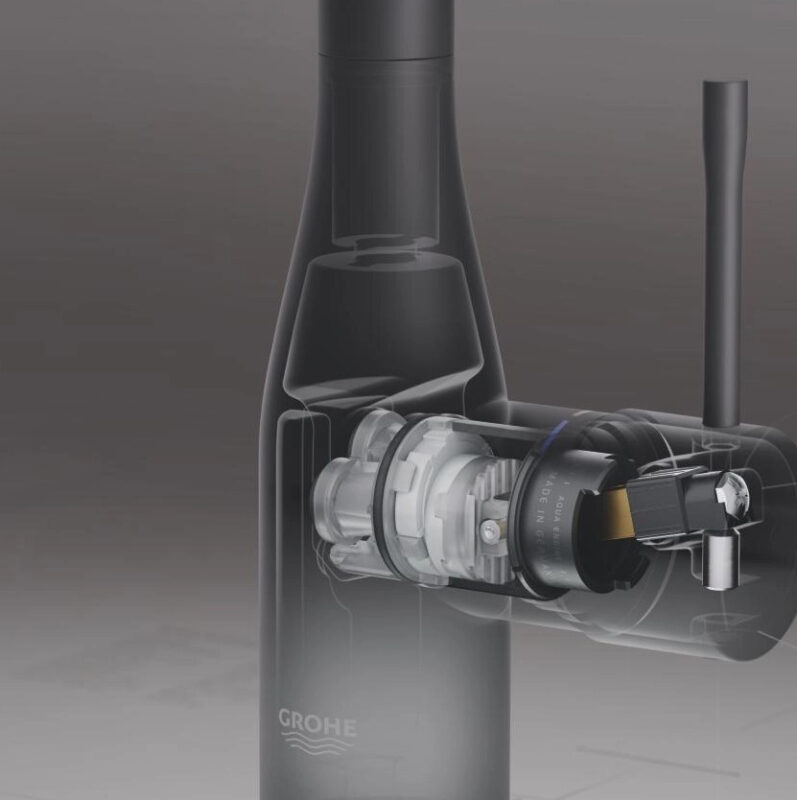
What the GROHE SilkMove mechanism is
Precision in water control is not a matter of perception, but the result of mechanical design and manufacturing tolerances.
In modern plumbing installations, the requirement for precise control of water flow and temperature is a key criterion when selecting faucets. Users evaluate not only aesthetics or durability, but also the operational behavior of the mechanism: how predictably it responds, how consistently it maintains settings, and how smooth the operating feel is.
In this context, GROHE SilkMove technology, as a type of ceramic cartridge, represents an evolution in mixer mechanisms aimed at optimizing precision and long-term stability.
Operating principle of the ceramic cartridge
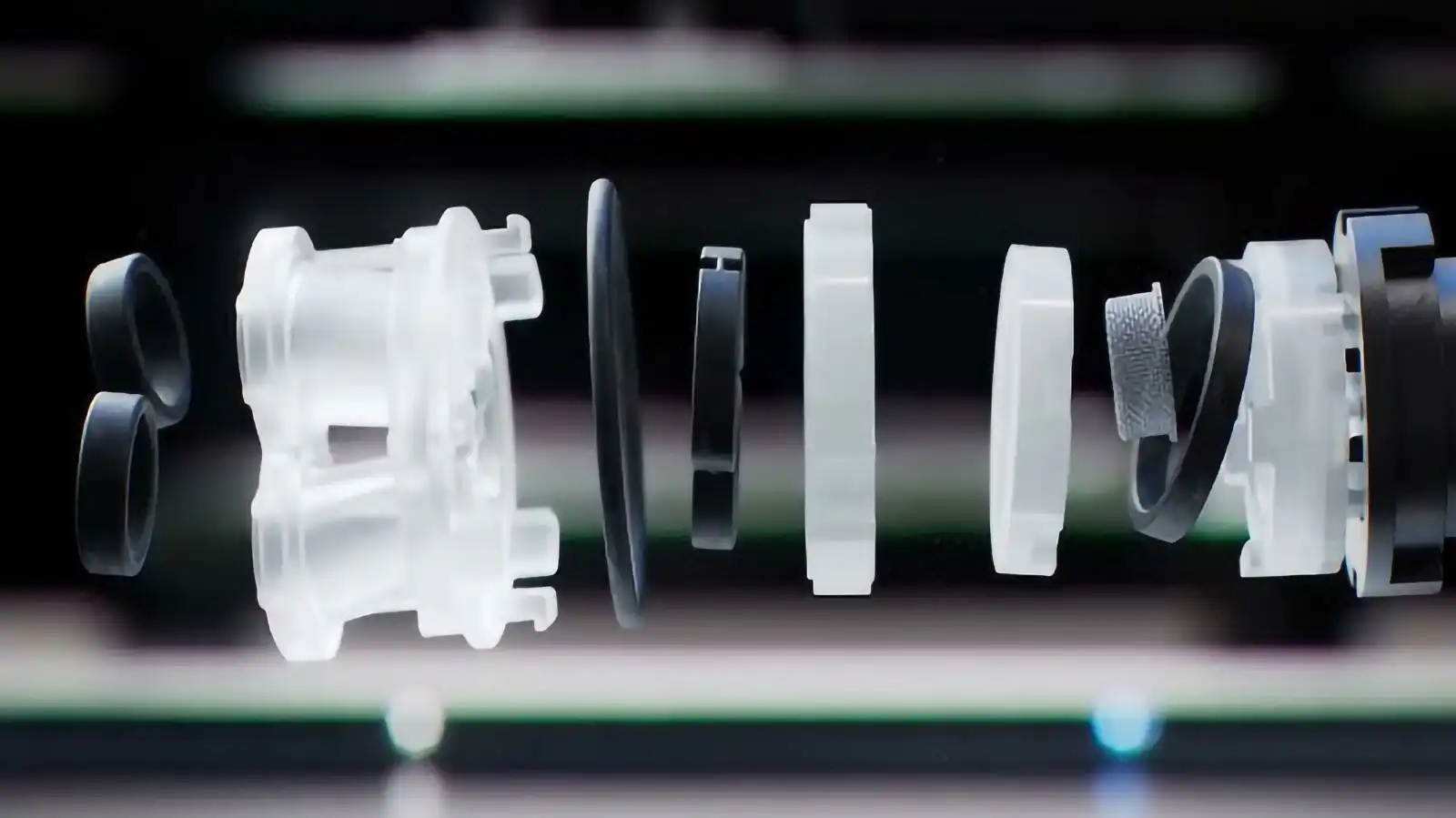
The GROHE SilkMove mechanism is a ceramic cartridge based on two flat discs made of high-purity hardened ceramic (aluminium oxide).
Its operating principle can be summarized as follows:
- The fixed disc contains the hot and cold water inlet openings
- The movable disc, connected to the lever, changes its position relative to the fixed disc
The overlap of the openings determines:
- flow rate (l/min)
- hot/cold water ratio
Lever movement is combined:
- vertical movement (up–down) → flow regulation
- horizontal movement (left–right) → temperature regulation
A critical parameter is the extremely tight tolerance between surfaces, ensuring sealing without the use of rubber gaskets.
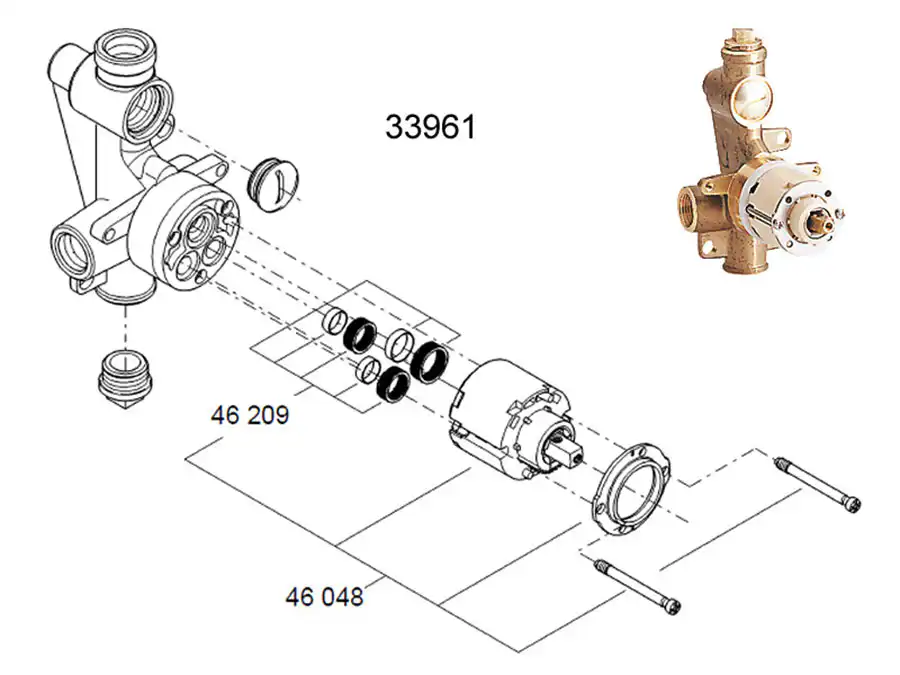
Technical characteristics and engineering interpretation
Manufacturing tolerances (μm)
The ceramic discs are manufactured with micrometre-level precision tolerances.
This results in:
- consistent sealing without leakage
- repeatability of adjustment
- reduced maintenance requirements
Surface finishing and friction
The surfaces undergo high-precision polishing.
This results in:
- minimized friction
- absence of stick-slip effects
- consistent operating feel
Lever response linearity
Lever displacement corresponds almost linearly to changes in flow and temperature.
This results in:
- no “dead zones”
- fine adjustment capability
- predictable behavior within operating pressures (e.g. 1–5 bar)
Sealing without elastomers
Sealing is achieved through ceramic-to-ceramic contact.
This results in:
- independence from rubber wear
- reduced risk of leakage
- stable performance across a wide temperature range
Ceramic material durability
The ceramic material offers high hardness and wear resistance.
This results in:
- a high number of operating cycles
- preservation of surface geometry
- long-term stability of control accuracy
Real-world performance
The precision of the mechanism becomes particularly evident in applications requiring frequent or fine adjustments:
Washbasin faucets
- precise temperature micro-adjustments
- immediate response
- reduced water waste
Shower faucets
- stable temperature control
- prevention of sudden fluctuations
- improved user comfort
Kitchen faucets
- frequent flow adjustments
- repeated temperature changes
- higher mechanical stress
In all cases, linearity and smooth operation reduce adjustment time and improve overall hydraulic performance.
Suitability by user profile
This technology is intended for applications requiring:
- mechanical reliability (technicians, installers)
- precision control (domestic applications)
- long-term stability (professional environments)
- reduced maintenance
It is particularly relevant in environments with:
- high usage frequency
- variable network pressure
- hard water conditions
Conclusion on ceramic mixer mechanisms
The GROHE SilkMove mechanism is an application of ceramic technology in mixers, where manufacturing precision is directly linked to functional performance.
The use of high-quality ceramic discs, combined with controlled tolerances and surface finishing, enables reliable and repeatable control of flow and temperature. Unlike conventional mechanisms, the absence of elastomeric components and the durability of the materials contribute to stable performance over time.
FAQ
What is a ceramic cartridge in a faucet?
A mechanism that uses ceramic discs for precise control of water flow and temperature without rubber seals.
How is sealing achieved without rubber components?
Through extremely tight tolerances and direct contact between ceramic surfaces.
Why is lever linearity important?
It enables predictable and precise adjustment without sudden changes.
Does network pressure affect performance?
Yes, but high-quality mechanisms maintain stable behavior within their operating range.
What is the difference compared to a conventional mechanism?
Ceramic cartridges offer lower wear, better sealing, and more stable long-term performance.